

Obsolescence is a fundamental characteristic of any electronic device or technology. As research progresses and technology improves, older generations of hardware and components become less suitable for modern high-performance systems and often pose compatibility issues. This, of course, applies to everyday consumer electronics like smartphones and laptops, but is especially relevant to the rapidly developing industry of network connectivity products and fibre optics.
The past two decades have seen an unprecedented increase in data speed and bandwidth demands stemming from exponential growth in connectivity across all sectors - from smart manufacturing and industry 4.0 adoption to the global expansion of AI. This pushes OEMs and major technology companies to focus their resources on next-generation solutions, accelerating product obsolescence as they attempt to stay ahead of competitors. Since 2000, commercially available data speeds have gone from 10Gb/s up to 1.6Tb/s, with companies already looking to develop 3.2Tb/s modules.
Why Obsolescence is Accelerating
Building pressure from global technology advancements and an increase in network connectivity dependence has pushed market leaders like NVIDIA®, Intel® and Coherent® to develop faster, more efficient and more technically sophisticated devices. With so much global investment channelled into AI, competition to deliver new and increasingly complex technologies is fierce. This in turn shortens development lifecycles, leaving older models behind before their useful lifespan is spent.
As corporations merge and evolve, their profit-driven business models ensure a core focus on financial efficiency. Spending and resource allocation must be carefully balanced to ensure that limited resources are used for the most commercially viable products. Legacy technology is not very profitable, nor does it keep companies relevant in new advancements, so is discontinued by the OEM.
Smart allocation of physical resources that make up components is also key. Rare earth minerals essential for electronics and fibre communication systems are increasingly difficult and expensive to source. Many factors impact this including resource depletion, geopolitical tensions, diversified industrial demands and lasting disruptions of the COVID-19 pandemic. Obsolescence reflects not only commercial priorities, but also the practical assignment of operational and physical resources as demand for older hardware falls.
Compliance issues are also a common reason for obsolescence. As government regulations evolve through political and environmental challenges, old components may no longer meet the required standards. For example, Restriction of Hazardous Substances (RoHS) regulations are frequently updated. The list of restricted substances is reviewed every few years and so is subject to change well within a product’s lifespan.
Implications of Obsolescence
When an End-of-Life (EOL) notice is issued, the product is typically given a transition period of six months to two years before it is officially discontinued. The exact timescale depends on company policies and the reason for discontinuation but allows customers to plan a strategy to phase out the product through system upgrades or finding alternative solutions. After this period, OEMs stop production, technical support and firmware updates.
This obsolescence cycle has significant impacts on those dealing with fibre optics and network connectivity infrastructure. Many feel forced to either bulk order EOL components or upgrade to next-generation solutions, even when it is not necessary for their working requirements. This causes considerable financial and operational strain on those that are not well prepared. Discontinued products face extended lead times, lacking technical support and a certainty of compatibility issues down the line if a redesign is not implemented.
Companies reliant on a single connectivity manufacturer are more exposed to these impacts with limited compatible options. They may be forced into expensive infrastructure overhauls that require testing, certification and compliance validation for new products. This can be an especially significant cost for industries like defence and healthcare that have particularly strict regulations.
Industrial Applications of Obsolescence
Industrial grade versions of obsolete transceivers are widely available amongst compatible suppliers and are specifically engineered to withstand extreme operating conditions including wide temperature ranges, moisture, dust, chemical exposure and mechanical vibrations. This robustness is harder to achieve and less commercially viable in newer technologies.
Some applications require custom legacy technology that can no longer be supplied by the OEM. Utilising third party compatibles offers reliable sourcing, often with a wide range of customisation options for specialised environments. Strict regulatory guidelines like Multi-source Agreements (MSA) and IEEE mean compatible alternatives are functionally equivalent to OEM original products.
In industrial applications, technology made obsolete years ago – such as through hole transceivers – may be preferred due to their unique characteristics. For example, ATGBICS recently dealt with a requirement in which soldering the transceiver directly to the PCB delivered better stability in the assembly – something that was only viable with a through hole transceiver.
While data rates and bandwidth capacities play a central role in enterprise networks, industrial sectors place more importance on robustness and longevity as high speeds are not a priority. Sectors such as finance, telecommunications and AI benefit heavily from the rapid developments in fibre technology, often cycling through products within five years. Transport, defence, manufacturing and similar industries, however, remain heavily reliant on hardware that has been obsolete for years, or even decades.
Transportation Sector
The transportation industry largely operates on legacy technology. Fibre systems in rail, aviation and shipping infrastructure are built to last for decades, meaning most operational components have been discontinued for years. Compatible solutions are therefore crucial for maintenance, replacement parts and incremental upgrades to avoid costly and unnecessary redesigns of entire systems.

If key infrastructure fails or is damaged, it can have far-reaching consequences, including disruption of shipping supply chains or metro operations. OEM original replacement parts are difficult to source and typically have lead times of many months. Compatible alternatives enable quick replacements for one-off repairs, or cost-effective buffer stock for future maintenance requirements.
Defence Sector
While certain military systems have moved to current-generation hardware, obsolete parts still form a major portion of demand, especially for field operations requiring industrial grade solutions. Like transport networks, military systems are designed to last decades with an emphasis on robustness and reliability. They are dependent on specialised equipment that is discontinued long before the end of its operational lifespan. High production costs and low profit margins mean manufacturers are reluctant to continue production, complicating availability and procurement.
Defence is one of the most tightly regulated industries, making technology transitions more time consuming and expensive than most. New product and supplier vetting, infrastructure planning and thorough testing means it cannot keep up with commercial development cycles, making access to reliable compatible solutions especially important.
Recommendations for Obsolescence Management
When an EOL notice is issued for a critical component, organisations should work quickly to identify reliable alternative sources that can deliver equivalent functionality, such as compatible or open standard solutions.
While bulk purchasing ahead of obsolescence may seem like a good safeguard, it introduces higher costs and risks around inaccurate demand forecasting, often resulting in either overstocking or falling short of project requirements.
Partnering with compatible suppliers such as ATGBICS helps mitigate obsolescence challenges by offering greater flexibility, improved lead times, and full adherence to MSA standards, guaranteeing 100% compatibility with OEM components. In addition, working with obsolescence solution providers certified by the IIOM (International Institute of Obsolescence Management) gives further assurance, as these organisations have the technical expertise to source, replace, or customise individual components, supporting long-term performance of network infrastructure.

Building partnerships with trusted suppliers further strengthens supply chain continuity. Compatible alternatives, often perceived as less reliable, are manufactured to meet the same industry standards and protocols as OEM products, delivering equivalent performance with added benefits in pricing, availability, and procurement efficiency.
The Future of Obsolescence
No technology’s lifecycle is infinite, and as global data requirements and connectivity integration continue to grow, high-end computing innovations must stay ahead of the curve. EOL notices will likely keep accelerating in line with new developments as market leaders focus their resources on faster, more efficient products, but this does not void the usefulness of discontinued hardware.
Obsolescence plays a critical role in many industries. The operational lifespan of older technology is far longer than new development cycles, meaning the market for obsolete components will only expand. Effective obsolescence management extends the life of existing equipment, reducing the financial, operational and environmental costs of large-scale system overhauls.
The continued growth of both new technology developments and the market for legacy products means that obsolescence management should no longer be responsive action. Integrating obsolescence planning into system design from the beginning eases the negative impacts of product discontinuation and sudden EOL notices.
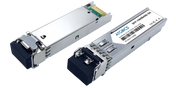
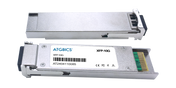
ATGBICS specialises in supporting legacy infrastructure with fully compatible, MSA compliant solutions that match OEM performance, quality and reliability. Its extensive portfolio includes legacy form factors like through hole 1x9, 2x5, 2x10 and legacy SFP/SFP+ with customisable component materials, PCBA design, lasers, driver chips and more. These are available across a range of compatible vendors but also include universally coded options for flexibility in multi-vendor environments. By combining engineering expertise with flexible design and coding services, ATGBICS allows organisations to extend system lifecycles while maintaining performance, compatibility, and long-term supply continuity and avoiding costly redesigns.