

Industry 4.0, also known as the fourth industrial revolution, refers to the interconnectivity and integration of physical and digital infrastructure across industrial environments, from manufacturing floor equipment and operational technology (OT) to edge networks, enterprise IT systems and cloud resources.
It follows three prior industrial revolutions:
- Introduction of water and steam powered machines as means of production.
- More advanced power generation allowed widespread electricity usage to be harnessed for assembly lines and mass production.
- Digitisation of factories with computers, advanced communications, programmable logic controllers (PLCs) and data giving robots and production processes greater autonomy and reducing human input.
Today, Industry 4.0 solutions build on this foundation through increased automation, smart manufacturing, AI and a highly interconnected ecosystem. This has resulted in improved operational, environmental and financial efficiency, productivity and further reductions in human-machine interactions.

Smart Factories and Connected Systems
Smart factories utilise tight integration of physical OT, digital IT and cloud-based systems for autonomous and decentralised decision making on the fly, improving predictive maintenance and automatic system optimisation capabilities.
Data collected from the factory floor is shared with the wider network, minimising costly and potentially dangerous downtime while boosting quality, productivity and overall system efficiency. Eliminating manual data collection between machines significantly reduces the risk of human error resulting in highly accurate information. This comprehensive data supports decision making across the organisation from logistics to sales and marketing.
At the core of Industry 4.0 manufacturing are several defining characteristics that enable interconnected and intelligent operations:
Industrial Networks
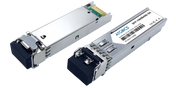
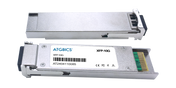
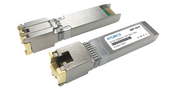
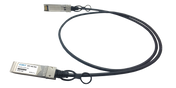
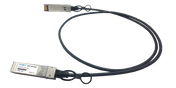
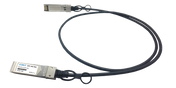
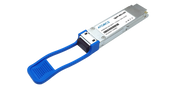
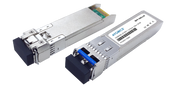
Scalable, dynamic networks with ultra-low latency and high reliability are fundamental to industry 4.0 principles. Modern industrial environments involve networks within networks, connecting distributed devices across OT, IT, edge networks, data centres and cloud platforms. A wide range of hardware is required to support this including both commercial and industrial grade transceivers, fibre cables, DACs, AOCs, NICs, WDM systems and more.
Industrial network downtime can have serious safety and operational implications, so device reliability is critical across the board. Industrial modules are specifically designed for the harsh environments, offering resistance to extreme temperatures, moisture, dust, vibration and electromagnetic interference (EMI).
Cybersecurity
The increased digitisation, size and data reliance of industry 4.0 networks opens more potential entry points for cybercriminals. Preventing operational disruption and keeping sensitive data secure requires advanced cybersecurity measures that are integrated into the network ecosystem, especially as IT, OT and IIoT systems converge.
Smart manufacturing infrastructure can also help mitigate these risks. For example, virtual network segmentation can be used for improved monitoring and control, while device labelling and categorisation enables faster and more accurate threat detection. Admins can be swiftly alerted, and compromised devices isolated before wider disruptions occur.
AI/ML/Cloud Computing
Intelligent, data driven decision making is central to Industry 4.0. AI and machine learning tools process huge amounts of data from many different sources to optimise operations, reduce energy usage, enable predictive maintenance and enhance cybersecurity.
High performance computing and cloud systems provide the fast, scalable infrastructure for deep analytics, allowing insights to be applied across multiple sectors and operational layers.
Edge Computing
Edge computing enables data processing at the point of creation, minimising latency in time-critical scenarios. This allows potential functional or safety issues to be identified and addressed immediately. Bypassing the wider network in this way reduces unnecessary network traffic while also improves data security by keeping sensitive data closer to the source.
Digital Twins
A digital twin is a virtual duplicate of production environments or networks. They use real-time device data combined with AI to simulate processes and test changes or new products/configurations before deployment in the live network. They help to improve workflows, efficiency and productivity without the risk of damaging operations.
Industrial Internet of Things (IIoT)
IIoT describes a collection of sensors, devices, machines, systems and software that use the internet to collect, share, analyse and action data in industrial settings. This enables end-to-end connectivity across the whole industrial process from factory floor manufacturing to sales, marketing and logistics, creating one intelligent and collaborative network.
This cooperation allows monitoring data to be centralised, making fault detection and operational improvements more efficient. Integrating intelligent systems within the IIoT architecture means much of this can be done automatically or through remote access.

Is Industry 4.0 for you?
While Industry 4.0 principles are widely regarded as an inevitability for industrial markets, the transition is gradual. Careful planning and incremental upgrades are required to introduce more digital intelligence while maintaining operations and balancing finances.
Benefits
- Increased efficiency, productivity and safety
- Reduced downtime
- Lower maintenance costs
- Accurate automated decision making
Challenges
- High initial investments and implementation time
- Legacy systems may need additional, more advanced upgrades for integration
- Increased cybersecurity risks
ATGBICS Solutions
ATGBICS supplies a comprehensive range of networking equipment to support your transition to Industry 4.0, from factory floor OT connectivity to high performance data centre and cloud computing infrastructure for AI integration:
- 20,000+ part numbers across over 300 compatible vendors | MSA Compliance | 100% Compatibility
- Industrial Grade Solutions | Extended, Rugged, Industrial operating temperatures from -40°C to +100°C
- Controlled BOM Management | Unique serialisation for full traceability | Consistency of build
- Custom Branding
- Prototype Design & Build
- Drop In | Universally Coded Transceivers
All our products adhere to strict industry standards and protocols, ensuring full compatibility with existing systems. We proudly offer a lifetime replacement warranty, with an experienced technical team ready to help you build a solution tailored to your unique requirements.
Explore our industrial grade transceivers, fibre solutions and networking hardware designed for factories and Industry 4.0 environments.