

From smart factories and renewable energy installations to transportation and critical infrastructure, fibre optics underpin the data-driven systems shaping modern industry. As manufacturers embrace Industry 4.0, the focus is shifting beyond bandwidth towards interoperability, resilience and supply-chain flexibility. Here, Karl Broderick, Managing Director at ATGBICS, examines how standards-based optical networking is helping industrial organisations deliver high-performance connectivity without vendor lock-in.
Industrial networks are under increasing pressure. Manufacturers are expected to deliver greater productivity, higher levels of automation and richer operational insight while simultaneously reducing costs, improving resilience and meeting demanding sustainability targets. At the same time, the convergence of operational technology (OT). information technology (IT) and cloud-based analytics is driving unprecedented growth in data traffic across industrial environments.
In this landscape, fibre optic connectivity has evolved from a supporting technology into a strategic enabler of digital transformation. Whether powering smart factories, renewable energy installations, transportation systems or critical infrastructure, optical networking now provides the foundation upon which modern industrial operations depend.
Yet as networks become more sophisticated, organisations face a difficult challenge: how can they maintain optical performance and reliability while reducing costs, avoiding supply-chain risks and preserving long-term flexibility?
According to ATGBICS' Karl Broderick, the answer lies in open standards, rigorous validation and a commitment to interoperability:
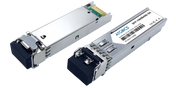
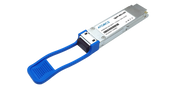
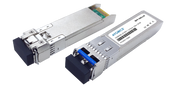
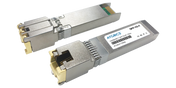
"Many industrial manufacturing sites use brands like NVIDIA, Finisar, Avago, Intel fibre optic transceivers," explains Broderick. "What ATGBICS offers is a 100% compatible solution of the OEM, reducing the production cost, lead time and maintaining optical performance, whilst maintaining interoperability, traceability and eliminating vendor lock-in."
His comments reflect a growing trend within industrial networking. Organisations are increasingly questioning the long-term implications of proprietary ecosystems that can restrict purchasing flexibility, increase lifecycle costs and create dependence on a single supplier.
As global supply chains continue to face disruption and component obsolescence becomes an ever-present concern, the ability to source fully compatible alternatives has become a strategic advantage rather than simply a procurement consideration.
Reducing costs without compromising performance
Historically, optical networking components have often been viewed as premium infrastructure investments. However, as industrial operators look to optimise costs across increasingly complex digital environments, greater scrutiny is being applied to every component within the network.
Broderick believes standards-based alternatives are changing the economics of fibre deployment:
"Our products can often be used as a drop-in solution," he says. "ATGBICS transceivers are up to 90% cheaper than the counterpart providing an immediate saving, while preserving reliability, compliance and long-term scalability."
Crucially, the discussion extends beyond cost alone. In industrial environments, lower cost components are only viable if they deliver identical operational performance.
"ATGBICS transceivers follow the MSA standard, ensuring customers that our products have the exact specifications of the OEM," says Broderick.
Multi-Source Agreements (MSAs) have become increasingly important as organisations seek greater flexibility in network design and procurement strategies. By standardising optical, electrical and mechanical characteristics across manufacturers, MSAs provide the foundation for interoperability throughout the networking ecosystem.
"Universally Coded Fibre products are gaining popularity in the marketplace allowing end users/designers/engineers more freedom of choice," Broderick continues. "ATGBICS Universally Coded MSA Network Transceivers are specifically designed for use in 'open standard' platforms, eliminating vendor lock-in and supporting versatile purchasing options of network transceivers."
For industrial organisations investing in infrastructure expected to operate for decades, this freedom of choice can significantly improve long-term resilience.
Building resilience through validation
While cost reduction and interoperability are important, reliability remains the defining requirement for industrial communications infrastructure. Downtime within automated production environments can result in substantial operational and financial consequences.
For Broderick, reliability begins with strict adherence to recognised standards:
"ATGBICS product stability is ensured through strict adherence to Multi-Source Agreement (MSA) specifications for each form factor, guaranteeing electrical, optical and mechanical interoperability across supported platforms."
However, modern validation extends far beyond compliance testing,
"Firmware coding and EEPROM structures are validated to ensure 100% host compatibility," he explains.
This increasingly software-driven approach reflects the evolution of modern networking systems, where compatibility depends as much on firmware behaviour as physical design.
Traceability has also become a critical consideration, particularly as manufacturers seek greater visibility across global supply chains.
"Each network transceiver is uniquely serialised, enabling full date-code control (<120 days), component-level BOM traceability and lifecycle management."
Such measures provide manufacturers with confidence that products can be tracked, verified and supported throughout their operational life.
ATGBICS also employs a comprehensive testing regime designed to verify both performance and durability. "Stability validation includes optical power calibration, wavelength verification, BER testing, eye diagram analysis and extended burn-in procedures," says Broderick. "Environmental reliability is confirmed through thermal cycling and operational stress testing,"
Compliance remains equally important.
"All products meet CE, FCC, RoHS, REACH, FDA, IEC 60825-1 laser safety requirements. We work with a fully accredited testing centre in the country of origin of our products."
From specification to scalable production
One of the most challenging stages in any optoelectronic project is the transition from prototype to full-scale production. Designs that perform successfully in laboratory environments do not always translate seamlessly into volume manufacturing.
According to Broderick, consistency begins with design discipline.
"Transitioning a fibre specification to prototype to volume production requires strict control of optical, electrical and mechanical parameters to ensure consistency of repeatability at scale."
Thermal management is particularly critical as data rates increase and component densities continue to rise.
"Thermal performance must be validated across the full operating range to prevent wavelength drift, optical power variation and premature component degradation."
Electrical performance must also remain tightly controlled.
"At this stage, pin connectivity and PCB layout must align precisely with MSA electrical specifications to guarantee signal integrity at high data rates."
Meanwhile, distance performance remains dependent upon rigorous validation.
"Distance performance is confirmed through insertion loss, return loss and BER testing against defined link budgets."
Firmware development forms another essential element.
"Firmware refinement is critical: PHY configuration, EEPROM header coding and DOM/DDM calibration must ensure seamless host recognition and compatibility across targeted platforms."
Building resilience into the supply chain
The events of recent years have highlighted the importance of supply-chain continuity across industrial sectors. Manufacturers increasingly require confidence not only in current component availability but also in future lifecycle support.
Broderick points to controlled manufacturing processes as a critical safeguard.
"Our ATGBICS units are deployed onsite for validation within the target infrastructure" he says. "Engineers subject the assemblies to vibration, thermal stress, extended reach, maximum data rate and sustained traffic load testing to confirm alignment stability and signal integrity under real-world conditions."
Following successful evaluation, manufacturing controls are formally established.
"Following successful validation, we provide a controlled BOM document, which is finalised and signed off. This freezes critical components, firmware revision and mechanical specifications, ensuring consistency of build, traceability and long-term stability in high-volume manufacturing."
Such measures help mitigate the risks associated with component substitution, obsolescence and production variability.
The role of fibre optics in Industry 4.0
The influence of fibre optics now extends far beyond simply transporting data between devices. Increasingly, optical connectivity forms the backbone of intelligent industrial systems.
"Fibre optics play an integral role in every industrial sector such as Manufacturing, Transportation, Avionics, Medical and Energy," says Broderick.
As organisations deploy Industrial Internet of Things (IIoT) architectures, the demand for reliable, low-latency communications continues to grow.
"ATGBICS fibre optic components are key to efficient and reliable communication between networked devices that enable intelligent network systems to run smoothly, reducing the need for intervention."
"They provide the backbone for collaborative end-to-end IoT networks, allowing devices to share, analyse and action data."
Perhaps most significantly, modern optical systems are contributing directly to predictive maintenance and operational intelligence.
"A key example in the context of automation is SFF-8473 MSA which defines digital diagnostic/optical monitoring (DDM/DOM)," explains Broderick "This technology monitors operational parameters in real time, flagging potential faults, isolating them and taking preventative action where necessary to ensure reliable operation for automated systems."
These capabilities are becoming increasingly important as manufacturers seek to move from reactive maintenance models towards predictive and condition-based approaches.
The convergence of OT, IT and cloud infrastructure is accelerating this transition.
"ATGBICS solutions are utilised in the tight integration of physical OT, digital IT and cloud-based systems. This enables low latency, autonomous and decentralised decision making on the fly, improving predictive maintenance and automatic system optimisations."
Designed for harsh environments
Industrial environments present challenges rarely encountered in conventional commercial networks. Extreme temperatures, dust, vibration and humidity all have the potential to compromise performance and reliability.
"Harsh operating conditions can have a big impact on a device's performance, reliability and durability," says Broderick.
To address these demands, industrial- grade products are specifically engineered for extended operating conditions.
"Commercial grade modules struggle to deal with extreme temperatures while industrial, rugged and extended grade solutions (-40° to 100°C), are specifically designed to deal with these conditions."
Additional protection can also be incorporated where required.
"Conformal coating can be applied to the PCB to create a thin protective polymer layer that shields sensitive components from humidity, condensation, dust ingress and chemical contaminants, reducing the risk of corrosion and short-circuiting."
The result is greater resilience across challenging industrial environments.
"ATGBICS industrial devices are made with high quality components and are rigorously tested in harsh conditions to ensure they are suitable for industrial markets."
Engineering through collaboration
Real-world deployments often reveal unique application requirements that cannot always be anticipated during initial development.
Broderick recalls a renewable energy project where a customer required replacement for an obsolete OEM Avago transceiver used within a wind turbine installation.
During testing, the customer identified a specific functionality requirement.
"During this client's in-house testing, they found a modification was required to enable the TX Disable function on pin 3 of the transceiver as an input to reset the internal ASIC."
Rather than forcing the customer to adapt to the product, ATGBICS refined the design.
"Our engineers prepared two more prototypes manufactured specifically for testing, along with detailed specifications and datasheets for the updated products."
The revised units subsequently passed validation and entered production.
"The units were approved by the client after further tests and assigned a new unique part number and BOM for future orders," says Broderick. "This flexible approach guarantees smooth project implementation for our clients with comprehensive support and short lead times throughout product evaluation up to project roll out."
As Industry 4.0 continues to accelerate, fibre optics will play an increasingly strategic role in connecting machines, systems and data. Yet the future of industrial networking will be defined by more than speed and bandwidth alone. Interoperability, supply-chain resilience, traceability and open standards are emerging as equally important considerations.
For Broderick, the industry's direction is clear: organisations that combine robust engineering with flexibility and freedom of choice will be best positioned to thrive in the next generation of connected industry.
Read the full publication here