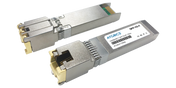


With AI data centre development continuing to ramp up, it is crucial to choose the right connectivity solutions to get the most out of your budget while maximising performance. Data centre interconnects utilise three different cabling types, all with distinct applications and advantages: direct attach cables (DACs), active optical cables (AOCs), and fibre cables used alongside transceivers.
At lower speeds, copper cabling solutions have been the reliable option for most short-range links, providing cost-effective, low power connections between racks and switches. However, as speeds increase, the distance this technology can reliably transmit decreases. This can be largely mitigated through active copper cabling (ACCs, also known as active DACs) that utilise built-in electronic components to condition and boost signals to maintain signal integrity over longer interconnects.
While this remains a valuable option for the majority of short-range links, copper’s physical limitations are leading to some high-speed applications favouring a transition to optics. This is not an immediate transition, but as data speeds push past 1.6T, the physical constraints of copper solutions make them harder to justify.
Direct Attach Cables (DACs)
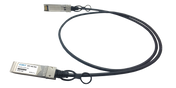
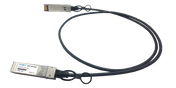
Regardless of this shift, both passive and active DACs are heavily used and valued in data centre design. They are pre-assembled short-range copper cables with a transceiver built into either side and excel in connecting switches, servers and other hardware within the same rack, or between adjacent racks. Because of their built-in signal conditioning technology, active DACs can reach slightly further with the cost of higher power consumption.
Active Optical Cables (AOCs)
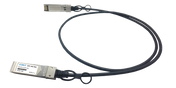
AOCs are structurally similar to DACs in the sense that they have inbuilt transceivers on either end, but the cable connecting them is optical fibre – not copper. They are more power intensive as they must convert incoming electrical signals to light, and then back again. They are mainly used for running cables between different racks or rows as they can carry signals over longer distances while protecting from electrical noise.
DAC vs AOC
- DACs use copper cables to send electrical signals, while AOCs use fibre optic cables to send data as light/optical signals
- DACs are limited to short distances usually around 7 metres for passive and 15 metres for active cable types
- AOCs support much longer link lengths up to 100 metres or more
- DACs have simpler technical design using relatively cheap copper and so are less expensive
- AOCs are more expensive with higher complexity including built-in electronic parts and lasers to convert optical/electrical signals on each end. Fibre is also a more expensive and time-consuming material to produce.
|
|
Passive DAC |
Active DAC |
AOC |
|
Cable Material |
Twinax Copper |
Twinax Copper |
Optical Fibre |
|
Signal Type |
Electrical |
Electrical |
Optical |
|
Reach |
<7m |
<15m |
<100m |
|
Power Consumption |
<0.15W |
<1W |
>1W |
|
Cost |
Lowest |
Low |
Highest |
Transceivers & Fibre
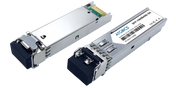
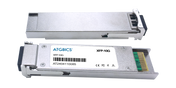
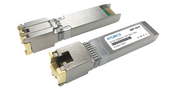
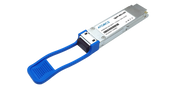
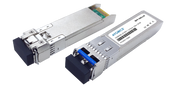
Finally, using transceivers alongside fibre cabling is by far the most flexible option. Although, it has the highest up-front cost, it is easier to monitor, repair and upgrade. This solution is mainly used for much longer distances, either on campus or between sites. Depending on the transceiver used, signals can reach over 100km where necessary making it the only viable solution for long-haul applications. Fibre is built to last and won’t need replacing when upgrading the network as the same cables can carry 100G, 200G, 400G and beyond – it is the transceiver that determines the data rate.
Here’s a breakdown of the key benefits and use cases of each solution so you can choose what is best for your requirements:
|
Application |
Best Cabling Solution |
|
Within rack < 7 metres |
Passive DAC |
|
Between adjacent racks 3-15 metres |
Active DAC/AOC |
|
Between rows or within halls 15-100 metres |
AOC |
|
Between halls, campuses or longer >100 metres |
Transceivers & Fibre |
Note that this is only a guide and applications may vary depending on your required data rate and system architecture. Please get in touch with any questions and we will be happy to help find the right solution for you.