

Introduction
When new technology hits commercial markets, component manufacturers often struggle to keep up with the sudden surge in demand. Combined with other factors like geopolitical tensions, rising consumer expectations and the accelerating development of existing and emerging technologies, part shortages drive up prices and stretch lead times well into months or even years.
We saw this back in 2000 when the mobile and telecom boom strained global fibre supply. The more recent semiconductor shortages, the effects of which are still being felt, were a result of a combination of factors including 5G rollout, COVID-19 and the subsequent demand spike for at-home entertainment devices.
Although much of the discourse around shortages has centred around semiconductors, energy and raw materials associated with AI and hyperscale computing, current fibre supply is also struggling to keep up. Fibre cabling is essential across most industries, especially in AI and high-performance computing. Current demand is far outpacing the capacity of conventional supply chains and making new fibre is a complex and time-consuming process.
With big tech companies and AI hyperscalers buying up the majority of high-speed supply, smaller businesses are left struggling with increased prices, supply chain bottlenecks and significantly longer lead times. In most cases, this leads to costly project delays, cancelations or forced replanning.
What is Causing the Shortages?
These shortages don’t happen in isolation and are often the result of several overlapping pressured that catch the industry by surprise.
The AI Boom
AI and machine learning has seen unprecedented growth over the past few years, and it is only accelerating. Training these models requires far more compute power than conventional cloud computing, and with it, huge quantities of cutting-edge fibre optics.
According to a recent article from Tom’s Hardware, citing CRU data, the fibre demand of data centres grew around 76% year-on-year in 2025 – up from only 5% in 2024. This unprecedented acceleration will continue with data centres expected to swallow up 30% of the entire global fibre demand in 2027.
The need for super powerful fibre draws OEM focus away from more conventional technology that is still used by most industries, in favour of providing more powerful, profitable products. This shift to next generation solutions is natural, but the rate at which it’s happening means less availability for procurement teams, tightening the supply bottleneck and once again driving up prices.
It’s not just fibre optics being swallowed up by AI, but many types of hardware that were once relatively cheap are also seeing sharp price increases and limited availability. Storage and memory hardware, GPUs, processing chips and more are also being heavily affected by AI infrastructure demands.
Telecom Expansion
Global data traffic in the telecom market is also increasing with more users and networking demand from consumers. Telecom operators are required to expand broadband infrastructure and backbone links to support growing 5G requirements and prepare for the inevitable implementation of 6G in the next few years. These networks rely on dense architectures that need massive amounts of fibre to build out infrastructure, placing further pressure on an already struggling supply chain.
Geopolitical Factors
Defence and aerospace industries continue to grow with ongoing conflicts around the world. Even nations not directly involved are raising defence budgets by billions, upgrading existing technologies and exploring new options for military and defence applications. Communication networks, secure data centres, wireless radio systems, vehicles, ships and unmanned aerial vehicles (UAVs) are constantly being improved and more heavily utilised in the field, and all depend on high-grade network connectivity solutions.
 Emerging Technologies
Other industries are increasingly integrating industry 4.0 principles and smart infrastructure such as manufacturing, automation, robotics and transportation, requiring heavily interconnected systems. This shift aims to optimise efficiency in industrial systems, streamlining physical OT, digital IT and cloud-based systems to reduce human input and enable autonomous and decentralised decision making. However, this integration requires more powerful technology than these industries have required in the past.
There is an excess of new start-ups and established companies alike ensuring their technology advancements are further integrated in everyday life. For example, autonomous cars, taxis and food delivery robots are beginning to be rolled out in public spheres, all of which involve AI integration and vast amounts of raw materials.
These factors all add to continued natural growth of consumer demand and the expectation for more advanced products year-on-year.
Why Does it Matter?
Procurement teams are facing sharp price hikes, extended lead times and project delays stemming from shortages not only in the fibre optic market, but also NICs, RAM, GPUs, processor chips and other hardware essential in data centres and beyond. Lead times for the latest NICs are pushing 52+ weeks, with pre-orders for Nvidia’s ConnectX-8 line far exceeding expectations ahead of release.
This has knock on effects across many sectors and consumer markets, delaying private and public network expansions, raising prices of consumer electronics like games consoles and smartphones, and making part replacements harder to source which forces development replanning for many companies.
As governments and businesses place a higher focus on digital infrastructure as a driver for economic growth, this is a trend that is likely to continue.
How to Mitigate the Risk
Careful forward planning and risk management is no longer just good practice, it has become an essential part of any project planning phase, particularly for parts that are at high risk of facing price hikes and availability constraints. Taking steps to ensure systems are designed with optimised efficiency, reduced complexity and futureproofing in mind can help teams stay ahead of the curve and be well prepared for any future shortages.
Standardised designs across systems can work to streamline procurement processes, enabling bulk ordering and simpler maintenance while providing more flexibility in reserve stock applications. Strategic high-quality spare inventories can help to extend the lifecycle of existing platforms and protect from unstable supply chains or end-of-life notices.
Perhaps most important is building and maintaining strong relationships with suppliers and distribution partners that enable you to have multiple procurement channels. ATGBICS offers a contract manufacturing service that allows our clients to secure long-term supply agreements and lock in pricing to protect you from tightening availability and increased manufacturing costs.
Compatible options provide a smart way to bypass rising prices and long lead times common with OEM original products. They are manufactured to the same specifications as originals meaning equivalent quality and reliability through strict adherence to industry standards and protocols like MSA and IEEE.
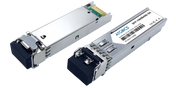
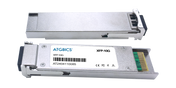
Compatible solutions are not bound by what OEMs deem high priority to manufacture. This means compatible vendors like ATGBICS can confidently supply products for any requirement, from legacy form factors up to cutting-edge fibre optics. Our diverse product range allows us to help customers avoid unnecessary and expensive system overhauls due to end-of-life notices and part obsolescence while also supporting those at the forefront of innovation and AI development.
ATGBICS provides end-to-end fibre connectivity solutions so our customers can buy everything they need for a project build in one place. We work with a diverse group of trusted suppliers giving us the edge over other vendors in providing lead times that are a fraction of OEMs. We also offer a comprehensive range of open standard products which work especially well as versatile buffer stock or in multi-vendor or vendor agnostic networks. Our portfolio covers over 20,000 unique part numbers compatible with 300+ vendors with technology ranging from legacy through-hole 1x9, 2x5 and SFP all the way up to the latest 800G form factors.
All our products come with a lifetime replacement warranty and compatibility guarantee to give our customers confidence in the quality and reliability of our solutions.
Get in touch with your requirement today and look out for our 1.6T range coming later this year!