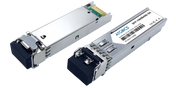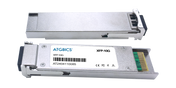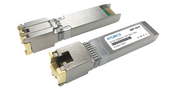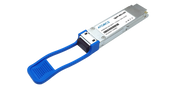


What is MSA Compliance?
The Multi-Source Agreement, or MSA, is a multi-vendor specification for network connectivity products that specifies form factor, mechanical interface, electrical interface and optical interface. This means that each device’s form factor is standardised in how they are manufactured and operate.
This enables interoperability in systems that use a multi-vendor infrastructure, or that utilise compatible modules, while preventing market monopoly by OEMs. Third parties can use MSA standards to manufacture technology with equivalent functionality, quality and reliability, resulting in cost-effective compatible options for end users.
MSA compliance not only provides more options for customers, it also guarantees compatibility with OEM original technology like switches and other network transceivers. Despite this, many system designers remain hesitant about compatible options, citing concerns over compatibility, quality and longevity.
Compatibles and Open Standard Products
Compatible vendors like ATGBICS are a key source of network connectivity solutions for companies globally, providing cost-effective solutions that match the performance of original parts. Whether a transceiver is an OEM original or compatible, it must be manufactured in line with relevant MSA and industry guidelines resulting in identical design, functionality and specifications.
Compatibles are especially valuable where OEMs have discontinued product lines. Rather than attempting to source technology that is potentially decades old to keep legacy systems running, compatible vendors provide obsolete modules that often outperform original parts in these scenarios, with much longer operational lifetimes. This is because they are manufactured as new using MSA guidelines and industry standards, keeping systems running years after end-of-life notices are dealt.
As obsolescence specialists, ATGBICS ensures simple procurement and short lead times for hard-to-source technology while saving system designers from being forced into expensive and often unnecessary system overhauls.
For some industrial clients, obsolete technology may actually be structurally preferable over new hardware. For example, through hole transceivers – hardware that is now decades old – may prove more useful in environments with excessive vibration such as drones or heavy machinery. The mounting type of this form factor is more robust compared to traditional SFP modules while still delivering on operational requirements such as data rates. We explore this in one of our latest case studies, ‘Drop-In Solution for Bidirectional Fibre Communication in Defence Drones’.
ATGBICS also offers a range of open standard products that are not coded for compatibility with a specific vendor. These MSA compliant devices offer greater flexibility in system design as their generic coding enables interoperability with infrastructure designed around most OEMs. They are particularly useful in vendor agnostic or multi-vendor systems and work well as more efficient, cost-effective buffer stock.
It is worth noting that some leading vendors, such as Cisco®, Juniper® and HPE®, are not compatible with open standard modules and require vendor specific EEPROM coding. For these systems, OEM specific compatibles are required.
Do Compatibles Affect Warranty?
A common myth surrounding compatibles is that using them alongside OEM equipment will invalidate the warranty of the original hardware. Although some vendors may imply this to keep buyers using their products, it is not true. In fact, forcing customers to use only their products within device ecosystems by invalidating warranty would breach anti-trust laws and violate the Magnuson-Moss Warranty Act.
The only way that OEM warranty would be rendered void is if the compatible part caused damage to the hardware, which is extremely unlikely. Network transceivers draw power from the host equipment to transmit and receive data across the network, working as one system. With no power coming through the optical port, it is more likely that host equipment would damage the transceiver, not the other way around.
Additionally, all current, voltage and electrical requirements are strictly defined by MSA standards and are consistent with both original and compatible parts.
Most OEMs state that if a fault is proven to have been caused by a third party product, they may withhold – not invalidate – warranty until the third party part has been replaced and retested. This means the warranty still stands until a new compatible part is proven to be the cause of a fault, which is highly unlikely given these modules are designed and manufactured to the same standards.
ATGBICS offers a lifetime replacement warranty for all our products, so in the rare case of a system fault caused by our part, we will happily send a replacement, keeping OEM warranty valid.