

What is WDM?
Wavelength Division Multiplexing (WDM) is used in fibre optic networking to channel multiple data streams onto a single fibre to increase bandwidth capacity and overall network efficiency. It is a low cost, low hassle solution for reducing network complexity or upgrading throughput of existing infrastructure.

There are two types of WDM each with unique capabilities and applications:
Dense WDM (DWDM) provides ultra high bandwidth capacity through tight wavelength spacing meaning more data can be transferred through a single fibre. DWDM operates usually within the C-band wavelength range (1530nm - 1565nm) and sometimes utilises the adjacent L-band range (1565nm - 1625nm) for increased capacity. It is capable of transmitting data over hundreds or even thousands of kilometres with the help of signal amplification technologies but has high implementation and operational costs.
Coarse WDM (CWDM) is a cheaper and more limited technology with much wider wavelength spans of 20nm operating within a range of 1270 - 1610nm, restricting the bandwidth capacity and range. It is however a great solution for optimising less demanding applications up to 80km.
MUX/DEMUX
MUX/DEMUX are passive devices responsible for managing the WDM data streams. At one end they multiplex (MUX), channelling the data from multiple devices through a single fibre of the connecting cable. At the other end they demultiplex (DEMUX), separating the incoming data back out into the original data streams.
We take a deeper look at this in our WDM blog >
WDM Transceivers
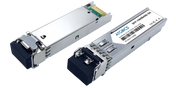
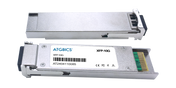
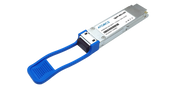
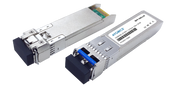
Transceivers specifically designed for WDM applications are used to convert the electrical signals from the host equipment into optical signals of a specific wavelength before sending it on to the multiplexer unit. They are also responsible for reversing this process on the demultiplexer end, receiving optical signals and converting them back to electrical signals that the host equipment can read.
By using independent wavelengths for each data stream in this way, they create their own ‘virtual fibre’ per wavelength. A single physical fibre can then carry multiple wavelengths across the network. This not only greatly increases the bandwidth capacity of each fibre, but also significantly reduces the physical fibre infrastructure requirements and allows new channels to be added without the need to lay new cabling, simplifying network architecture.

This has obvious benefits when it comes to cost and efficiency. Utilising WDM designs reduces the number of physical components within the network, saving valuable space as well as money. WDM transceivers also benefit from low power consumption, further aiding in reducing overall network costs with efficient energy usage all while boosting performance. Their scalability and flexibility help futureproof infrastructure avoiding potential future upgrade costs.
Tunable Transceivers
Tunable WDM transceivers perform the same function as their fixed counterparts but have flexibility in their transmit and receive wavelengths. They can dynamically tune to any wavelength within a certain range to accommodate the real-time needs of the network. This can be done manually but is usually automatic.
Although more expensive, this technology can help streamline your inventory, eliminating the need for multiple single wavelength modules in favour of one that is compatible with them all. They can also easily adapt to new network requirements and scale with your infrastructure as you alter, improve or upgrade while reducing the necessary on-hand inventory. This often makes tunable transceivers worth the initial extra cost to save in the long run.
WDM Transceiver Applications
WDM transceivers are especially useful in scenarios requiring high capacity, low latency, efficient fibre interconnects over long distances. Some key applications include:
- Data centre interconnects
- Telecom core networks
- Metro networks
- 5G and mobile infrastructure
- Large enterprise and campus networks
- Content delivery networks
- Cloud infrastructure
ATGBICS Solutions
At ATGBICS we supply a wide range of WDM transceivers for any application from low speed CWDM to cutting-edge 400G DWDM and tunable modules for the most demanding requirements.
We also provide a comprehensive range of MUX/DEMUX and fibre cabling solutions to complete your WDM infrastructure and provide unparalleled reliable connectivity.
Our commitment to industry standards and protocols gives our clients peace of mind when it comes to our products. All transceivers are MSA compliant ensuring seamless functionality and operational stability regardless of whether your network is based on manufacturer original parts. On top of that, we proudly offer a compatibility guarantee and lifetime replacement warranty on all our products.